



Quick answer
A pregnancy pillow is a long, shaped pillow that supports your belly, back, hips and knees so you can sleep comfortably on your side. The American College of Obstetricians and Gynecologists (ACOG) says side sleeping in the second and third trimesters may be best. U-shaped pillows support both sides of the body, C- and J-shaped pillows support the back and belly with less bulk, and straight body pillows or wedges are compact options for targeted support.
Key takeaways
- Side sleeping is recommended in the second and third trimesters, with one or both knees bent, according to ACOG.
- Back sleeping later in pregnancy puts the weight of the uterus on the spine and may compress a major blood vessel, ACOG explains.
- ACOG suggests pillows between the knees, under the belly, or a full-length body pillow for support.
- The left side is often preferred for blood flow, but the right side is also acceptable, says the Sleep Foundation.
- A wedge pillow can help with pregnancy heartburn by raising the upper body.
- After birth, keep pillows out of the baby's sleep space: the American Academy of Pediatrics warns that pillows increase the risk of suffocation.
Why sleep gets harder during pregnancy
Sleep gets harder during pregnancy because the growing belly limits comfortable positions and the body changes put extra strain on the back, hips and digestive system. The Sleep Foundation notes that a majority of pregnant people experience lower back pain, and many also deal with heartburn, leg cramps and nausea that disrupt sleep.
- Belly size: stomach sleeping becomes impractical and back sleeping is not recommended later on.
- Back and hip pain: weight gain and posture changes load the lower back and pelvis.
- Heartburn: lying flat can make acid reflux worse.
- Frequent waking: changing positions with a large belly is harder without support.
Best sleeping position during pregnancy
The best sleeping position in the second and third trimesters is on your side with one or both knees bent, according to ACOG. Sleeping on your back later in pregnancy puts the weight of the uterus on your spine and back muscles and may compress a major blood vessel that carries blood to the uterus, which can make you feel dizzy and may reduce blood flow to the baby.
| Stage | Recommended position | Pillow support |
|---|---|---|
| First trimester | Any comfortable position, including back or stomach | Regular pillows; knee pillow if hips feel sore |
| Second trimester | Side sleeping, knees bent (left side often preferred) | Pillow between the knees and under the belly |
| Third trimester | Side sleeping, knees bent; avoid lying flat on your back | Full-length body pillow or U/J-shaped pillow; wedge for heartburn |
Many people change positions during the night. If you wake up on your back, simply roll onto your side again. A pillow behind your back makes it harder to roll over in your sleep.
What is a pregnancy pillow and do you need one?
A pregnancy pillow is a long, shaped pillow designed to support the belly, back, hips and knees at the same time while you sleep on your side. You do not strictly need one, since regular pillows placed between the knees and under the belly can work. But a pregnancy pillow keeps everything in place in one piece, so you don't wake up to rearrange a pile of pillows.
A pregnancy pillow may help if you:
- Have trouble staying on your side all night.
- Wake up with hip, lower back or pelvic pain.
- Feel your belly pulling when you lie on your side.
- Have sciatica or pain that travels down one leg.
For a complete overview, read Everything You Need To Know About A Pregnancy Pillow.
When should you start using a pregnancy pillow?
You can start using a pregnancy pillow whenever sleep becomes uncomfortable. Many people start in the second trimester, when side sleeping is recommended and the belly begins to grow. There is no rule against starting earlier: if a pillow helps you sleep better in the first trimester, it is fine to use it.
Pregnancy pillow shapes compared
The right shape depends on how much support you need, how much space you have in bed, and whether you switch sides often.
| Shape | Supports | Pros | Cons | Our option |
|---|---|---|---|---|
| U-shape | Head, back, belly and knees on both sides | Most support; switch sides without moving the pillow | Takes a lot of bed space | Organic Latex U-Shape Body Pillow |
| J-shape / C-shape | Head, belly and knees, or head and back | Full support with less bulk than a U | Must be moved when you switch sides | Organic Latex J-Shape Body Pillow |
| Straight body pillow | Belly and knees (hugged), or back | Fits any bed; easy to reposition; great after pregnancy | Supports one side at a time | Better Body Pillow / Organic Latex Straight |
| Knee pillow | Knees and hips | Compact; stays in place with a strap | No belly or back support | The Knee T |
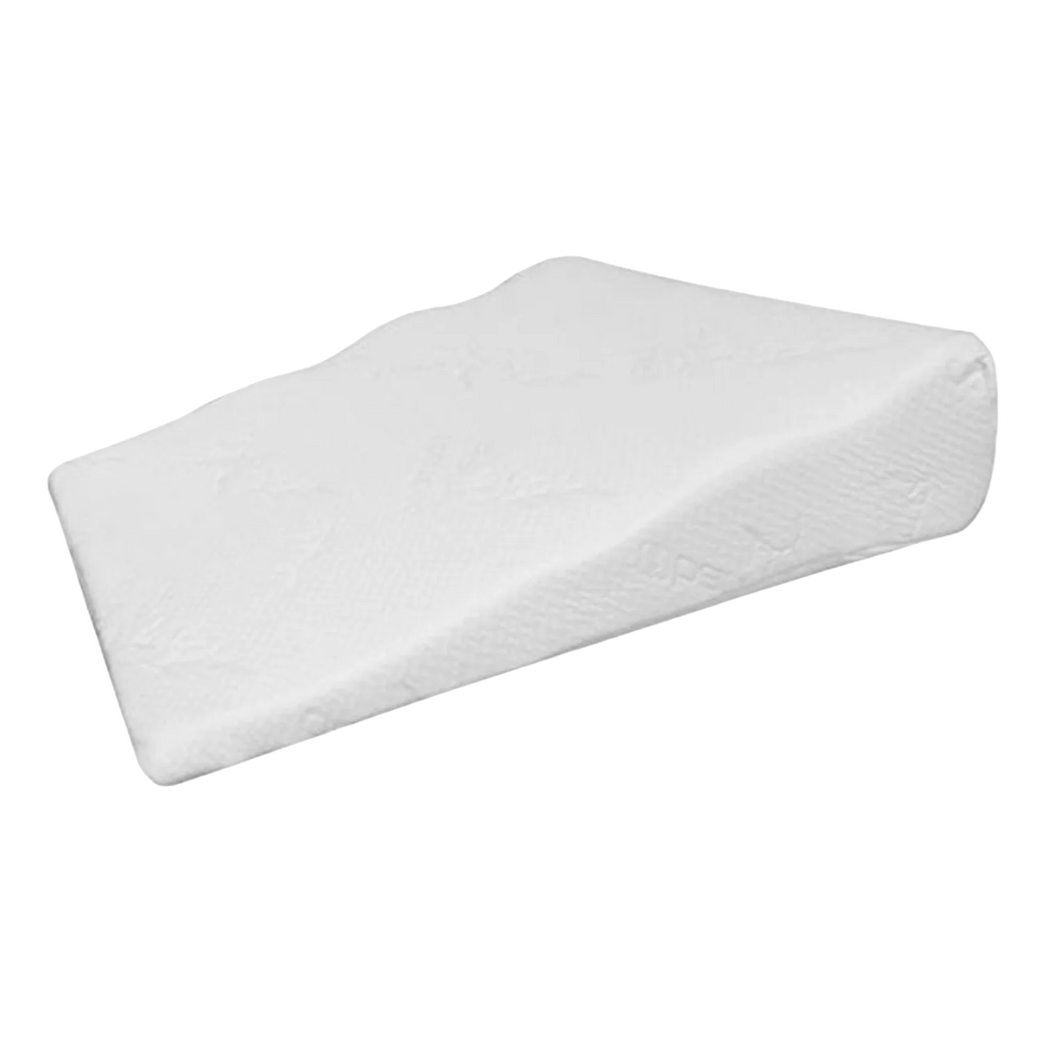
| Wedge | Belly (small wedge) or upper body (bed wedge) | Targeted support; bed wedge helps heartburn | Covers one area only | Acid Reflux Wedge |
How to use a pregnancy pillow
A pregnancy pillow works best when it supports three areas at once: the knees, the belly and the back. Follow these steps:
- Lie on your side, ideally the left, with one or both knees bent.
- Place the pillow between your knees so your top leg is level with your hip. This reduces pressure on the hips and lower back.
- Tuck part of the pillow under your belly to take weight off your lower back.
- Put the other side of the pillow (or a straight pillow) behind your back to stop you from rolling onto your back.
- Support your head and neck with the top of the pillow or your regular pillow, keeping your neck in line with your spine.
- Raise your upper body with a wedge if heartburn keeps you awake.
More tips for side sleepers: Essential Guide to Pregnancy Body Pillows for Side Sleepers.
Back pain, sciatica and heartburn in pregnancy
Lower back and hip pain
A pillow between the knees keeps the pelvis level and reduces hip and back pressure, while a pillow under the belly relieves lower back strain. A contoured knee pillow such as The Knee T stays in place when you turn over. For more on back pain and sleep, read How to Sleep with Lower Back Pain.
Sciatica during pregnancy
Some pregnant people feel pain that starts in the lower back or buttock and travels down one leg. Side sleeping on the pain-free side with a pillow between the knees can reduce pressure on the nerve. Read Managing Sciatica During Pregnancy and our complete Sciatica Guide.
Heartburn at night
Elevating the head of your bed or sleeping slightly upright on a wedge pillow may help with nighttime heartburn during pregnancy, according to the Sleep Foundation. A wedge raises the whole upper body, which works better than stacking regular pillows. See the Acid Reflux Wedge.
Materials and features to look for
- Breathable fill: pregnancy can make you feel warmer at night. Latex and shredded fills allow more airflow than solid foam.
- Adjustable firmness: shredded fills let you shape the pillow and add or remove support.
- Removable, washable cover: a zippered bamboo or cotton cover is easier to keep clean.
- Hypoallergenic materials: useful if you have allergies or sensitive skin.
- Size vs. bed space: a U-shaped pillow takes up a lot of room; a J-shape or straight pillow is better for smaller beds or shared beds.
- Use after pregnancy: a good body pillow keeps supporting side sleeping long after birth.
Body pillows for side sleepers (not just pregnancy)
Body pillows are not only for pregnancy. Anyone who sleeps on their side can use one to keep the hips, shoulders and spine aligned. Hugging a body pillow stops the top shoulder from rolling forward, and placing its lower end between the knees keeps the pelvis level. They also help stomach sleepers transition to side sleeping.
Read The Ultimate Guide to Choosing the Perfect Body Pillow, and compare all pillow types in our Pillow Buying Guide.
Using your pillow after birth
A pregnancy or body pillow can stay useful after delivery: for side sleeping during recovery, for extra back support while sitting up, or to prop your arms while feeding your baby.
Safety first: never let your baby sleep on, against or next to a pregnancy, body or nursing pillow. The American Academy of Pediatrics warns that soft objects, including pillows, increase the risk of entrapment and suffocation, and recommends a firm, flat sleep surface such as a crib or bassinet that meets safety standards.
Recommended pregnancy and body pillows
These Back Support Systems pillows are designed for side sleeping during pregnancy and beyond. All are made in the USA.


When to talk to your provider
Discomfort is common in pregnancy, but talk to your OB-GYN or midwife if you have severe or constant back or pelvic pain, pain that travels down your leg with numbness or weakness, heartburn that does not improve, sudden swelling of the face or hands, or if poor sleep is affecting your daily life. Always follow your provider's advice on sleeping positions for your pregnancy.
This article is for informational purposes only and is not a substitute for professional medical advice. Always consult your doctor, midwife or a qualified health provider about your pregnancy.
Frequently asked questions
When should I start using a pregnancy pillow?
You can start using a pregnancy pillow as soon as sleep becomes uncomfortable. Many people start in the second trimester, when side sleeping is recommended and the belly begins to grow, but there is no problem starting earlier if it helps you sleep.
What is the best sleeping position when pregnant?
Side sleeping is the best position in the second and third trimesters, according to ACOG, with one or both knees bent. The left side is often preferred for blood flow, but the right side is also acceptable. Pillows between the knees and under the belly add support.
Is it safe to sleep on my back while pregnant?
Back sleeping is generally fine early in pregnancy. In the second and third trimesters, ACOG explains that it puts the weight of the uterus on your spine and may compress a major blood vessel, so side sleeping may be best. If you wake up on your back, roll onto your side.
Which pregnancy pillow shape is best?
A U-shaped pillow gives the most support because it covers your back and belly and lets you switch sides without moving it. A C- or J-shaped pillow gives similar support with less bulk. A straight body pillow or a wedge is a good compact choice for smaller beds.
Can a pregnancy pillow help with back pain?
Yes. A pregnancy pillow placed between the knees keeps the pelvis level and reduces hip and lower back pressure, and support under the belly relieves strain on the lower back. It also helps you stay on your side through the night.
Can I use a body pillow if I'm not pregnant?
Yes. Body pillows help any side sleeper keep the hips, shoulders and spine aligned. They are also useful for people with hip or back pain and for stomach sleepers who want to switch to side sleeping.
How do I wash a pregnancy pillow?
Most pregnancy pillows have a removable cover that you can machine wash. Wash the inner pillow only if the care label allows it; latex and memory foam fills usually should not go in the washing machine. Wash the cover regularly.
Can I use my pregnancy pillow for my baby?
You can use it to support your own arms and back while feeding, but never let your baby sleep on or against it. The American Academy of Pediatrics warns that pillows in the sleep area increase the risk of suffocation. Babies should sleep on a firm, flat surface.
Sources
- American College of Obstetricians and Gynecologists (ACOG). Can I sleep on my back when I'm pregnant?
- Sleep Foundation. Pregnancy Sleeping Positions.
- American Academy of Pediatrics (HealthyChildren.org). A Parent's Guide to Safe Sleep.
- Mayo Clinic. GERD: Diagnosis and treatment.


